Residential cockroach remediation requires an integrated pest management approach that addresses breeding biology rather than relying on broadcast chemical sprays. In coastal and canyon microclimates like Pacific…
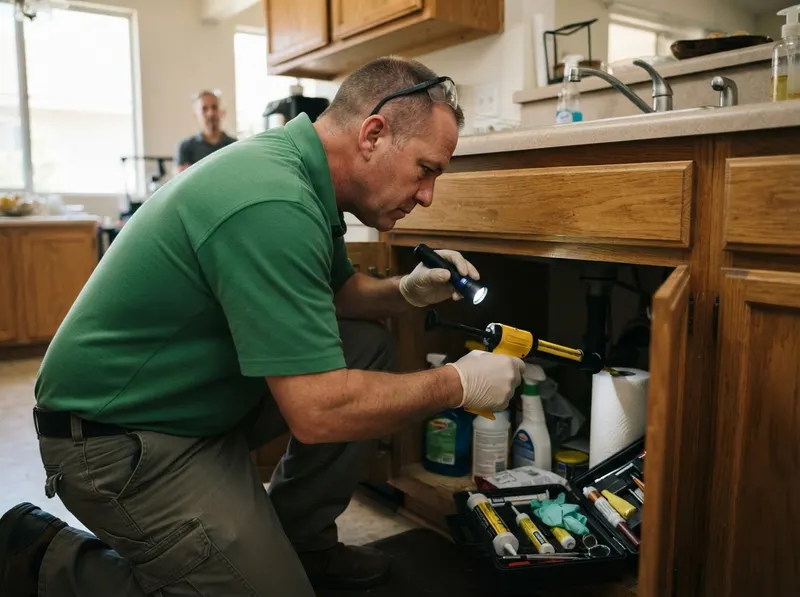
Residential cockroach remediation requires an integrated pest management approach that addresses breeding biology rather than relying on broadcast chemical sprays. In coastal and canyon microclimates like Pacific Beach, Ocean Beach, and Point Loma, marine moisture accelerates the reproduction cycles of American cockroaches emerging from municipal stormwater lines. Conversely, interior infestations of German cockroaches in dense multi-family kitchens across North Park, Hillcrest, and Clairemont thrive around warm compressor motors and under-sink plumbing penetrations. Treatment begins with non-toxic physical removal using HEPA-filtered vacuum extraction to slash the reproductive breeding base immediately, avoiding the dispersion caused by over-the-counter aerosol bombs. Technicians deploy targeted bait matrices containing active ingredients like abamectin or indoxacarb directly into nesting voids, paired with juvenile hormone analogs that halt nymph maturation. The protocol aligns with the non-chemical safety principles outlined by the EPA Integrated Pest Management standards to keep food-preparation surfaces free of airborne synthetic pyrethroids.
Homeowners weighing single localized treatments against whole-structure intervention must consider structural pathways. A localized treatment suits minor outdoor American cockroach incursions around foundation weep screeds in suburban Mission Hills or Carmel Valley. However, when German cockroaches appear in pantries, an entire kitchen-and-bath barrier is necessary because females carry egg cases (oothecae) containing up to 48 nymphs, which scatter behind drywall voids if disturbed incompletely. The trade-off between localized spot-baiting and complete structure remediation is containment speed versus upfront scope: treating only one cabinet allows hidden populations to repopulate living areas within 30 days, whereas full-perimeter remediation disrupts the nesting chain permanently. Ground-level treatments adhere strictly to guidelines from the California Department of Pesticide Regulation to prevent runoff into delicate coastal watersheds such as the Mission Bay aquatic basin. Structural recommendations follow standard residential sealing methods documented by the International Association of Certified Home Inspectors, directing property owners to caulk gaps wider than 1/16 inch around utility pipes.
For properties backing up to natural brush in Scripps Ranch and La Jolla, exterior perimeters face heavy pressure from sewer and garden roaches during dry autumn conditions. Remediation incorporates exterior botanical perimeter defenses and mechanical exclusion along garage door sweeps, following foundational research from the UC Statewide IPM Program. Exterior applications prevent migration without endangering domestic pets or domestic honeybee populations. Technical measures comply with the consumer safety expectations set by the National Pest Management Association, ensuring baits are placed strictly in inaccessible wall channels, hinge pockets, and hollow cabinetry feet. Indoor moisture zones are diagnosed against the moisture-control criteria developed by the American Society of Heating, Refrigerating and Air-Conditioning Engineers to permanently remove micro-humidity traps behind domestic dishwashers. Moisture reduction techniques align with housing sanitation codes enforced by the San Diego County Department of Environmental Health and Quality. Structural repair guidelines follow building envelope performance benchmarks published by the U.S. Department of Housing and Urban Development and moisture-intrusion mitigation principles established by the Building Science Corporation, delivering lasting ecological barrier defense.
Every job gets a firm, written price after a free on-site visit.
For standards, safe disposal, and service guidance on pest control services in San Diego, CA, useful references include U.S. EPA, ENERGY STAR, U.S. Dept. of Energy, Consumer.gov, U.S. Census Bureau, and Google Maps. General consumer and small-business resources are available from USA.gov, Better Business Bureau, FTC Consumer Advice, U.S. Small Business Administration, and Ready.gov.
Tell us about your residential cockroach remediation job in San Diego and we'll send a clear, written quote, usually the same day.
 EcoGuard Extermination