Rodent exclusion addresses entry pathways directly to preserve residential living spaces and family health. Coastal microclimates and dense urban vegetation throughout San Diego, from the older Craftsman subfloors in…
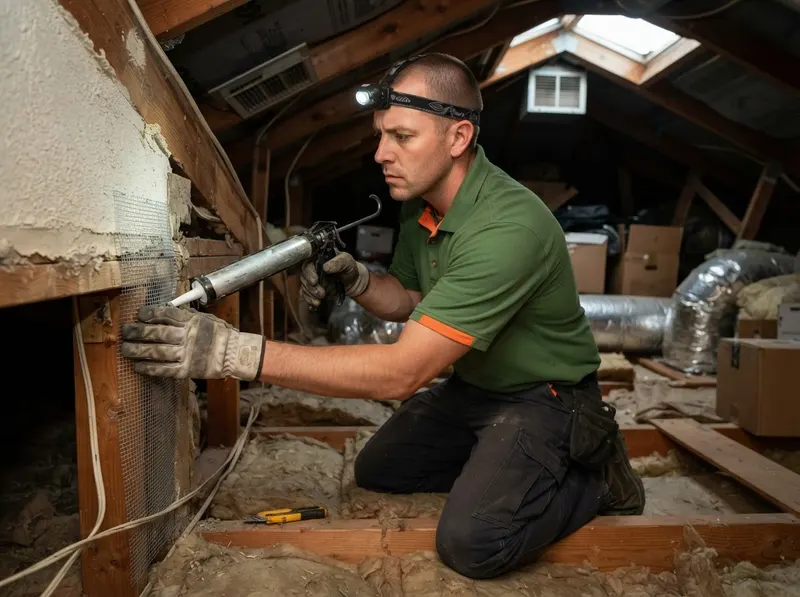
Rodent exclusion addresses entry pathways directly to preserve residential living spaces and family health. Coastal microclimates and dense urban vegetation throughout San Diego, from the older Craftsman subfloors in North Park and Mission Hills to the canyon-adjacent foundations in Clairemont, Scripps Ranch, and Carmel Valley, create elevated roof rat activity year-round. Modern pest management adheres to rigorous integrated pest management guidelines, which prioritize physical containment over broadcast rodenticides. Standard poisons risk secondary poisoning of household pets and native predatory birds, while leaving poisoned pests to expire inside subfloor drywall. The physical exclusion process permanently seals gaps larger than 0.25 inches (6.35 mm) using non-chewable materials, including 19-gauge galvanized steel mesh, exterior-grade copper mesh, and heavy metal flashing along roof joints, eave lines, and crawlspace vents. Property owners can inspect common entry points around gas risers, foundation sill plates, and weep screeds to verify structural vulnerabilities.
Structural rodent defense requires matching the exclusion technique to the specific building architecture. Raised-foundation homes built before 1960 in Point Loma, Hillcrest, and Ocean Beach frequently present unscreened perimeter crawlspace vents, deteriorated wood access hatches, and plumbing penetrations that bypass the subfloor. In contrast, slab-on-grade properties in La Jolla and Pacific Beach often encounter roof rats running across utility lines and overhanging eucalyptus boughs directly into attic ridge vents and soffit returns. Following technical remediation protocols outlined by the Centers for Disease Control and Prevention, entry blocking precedes all sanitization. If a crawlspace exhibits rodent droppings, urine trails, or degraded fiberglass, technicians apply an enzyme-based, non-toxic biocidal mist to neutralize allergens and pathogens before applying any localized mechanical seals.
Selecting permanent structural exclusion instead of endless toxic baiting involves clear operational trade-offs. Chemical bait boxes placed around a foundation require continual monthly maintenance fees and carry the persistent risk that a rat carries poisoned anticoagulant bait into family living areas. Complete physical exclusion demands higher initial investment because technicians systematically seal fascia gaps, plumbing chases, and crawlspace air vents, but it eliminates the need for ongoing recurring chemical contracts. EcoGuard Extermination pairs these mechanical exclusions with targeted trapping cycles inside the sealed perimeter to capture any animals remaining indoors, avoiding poison carcasses in hidden framing. Building code guidelines from the City of San Diego Development Services govern ventilation standards to ensure crawlspace and roof vent screening preserves mandatory attic airflow while restricting pest access.
1. Initial structural diagnostics: Technicians conduct a 45-point physical audit of the perimeter, attic roofline, and foundation vents to locate gnaw marks, grease rub marks, and gaps exceeding 0.25 inches.
2. Primary ingress sealing: Install 19-gauge galvanized wire hardware cloth across crawlspace vents, subfloor access hatches, and eave gaps, anchored with mechanical fasteners.
3. Secondary penetration containment: Seal plumbing pipe wall penetrations, air conditioning conduit gaps, and weep screeds using a compound mix of copper mesh and elastomeric sealant.
4. Interior vector elimination: Place safe, mechanical snap traps within attic and crawlspace cavities away from children and household pets to remove rodents stranded behind the new barriers.
5. Biological decontamination: Apply plant-compatible botanical or enzymatic clearing sprays to eliminate rodent pheromone trails that attract neighborhood rodents to the building envelope.
Every job gets a firm, written price after a free on-site visit.
For standards, safe disposal, and service guidance on pest control services in San Diego, CA, useful references include U.S. EPA, ENERGY STAR, U.S. Dept. of Energy, Consumer.gov, U.S. Census Bureau, and Google Maps. General consumer and small-business resources are available from USA.gov, Better Business Bureau, FTC Consumer Advice, U.S. Small Business Administration, and Ready.gov.
Tell us about your attic and crawlspace rodent exclusion job in San Diego and we'll send a clear, written quote, usually the same day.
 EcoGuard Extermination