EcoGuard Extermination delivers targeted perimeter defense across coastal and canyon properties using botanical actives like rosemary oil, cedarwood extract, and phenethyl propionate. San Diego's mild marine layer and…
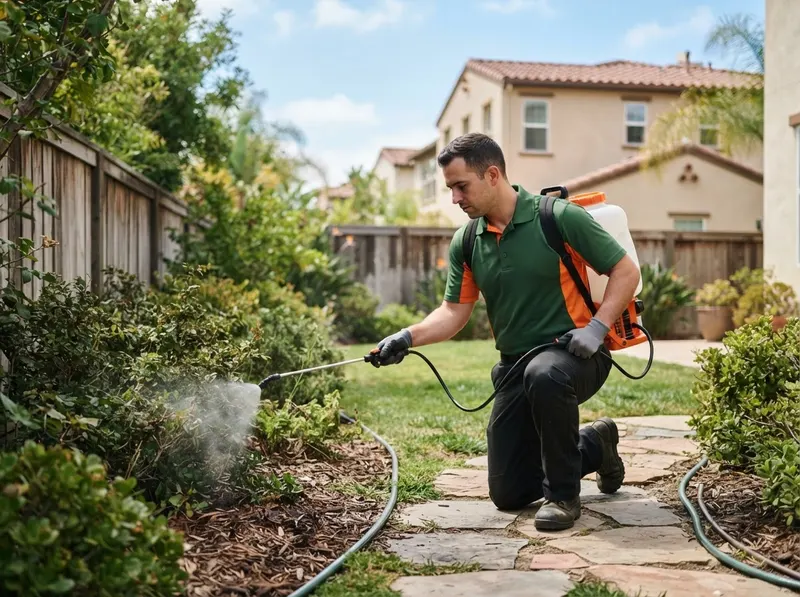
EcoGuard Extermination delivers targeted perimeter defense across coastal and canyon properties using botanical actives like rosemary oil, cedarwood extract, and phenethyl propionate. San Diego's mild marine layer and dense coastal brush zones create extended parasite breeding seasons. Properties bordering natural canyon corridors in Clairemont, Mission Hills, and Scripps Ranch frequently encounter San Diego County tick surveillance concerns due to wildlife vectors such as western fence lizards, rabbits, and brush rats. By aligning treatments with EPA Integrated Pest Management principles, technicians apply botanical micro-emulsions directly to transition zones, the first 6 to 9 feet where landscaped lawns meet dense groundcover, eliminating resting adult parasites without spraying toxic synthetic pyrethroids across areas where dogs play.
Flea infestations in coastal communities such as Pacific Beach, Ocean Beach, and La Jolla often originate in moist, sandy soils shielded from direct solar ultraviolet radiation. In these environments, flea larvae develop deep within decaying organic matter. EcoGuard Extermination applies California Department of Pesticide Regulation-compliant botanical concentrates combined with insect growth regulators that disrupt chitin formation. According to biological data from the UC IPM flea management guidelines, over 95% of a flea population exists as eggs, larvae, or pupae in the soil rather than adults on the host animal. Spraying only the adult fleas visible on family pets provides temporary relief; durable protection requires interrupting soil-dwelling larval development across the entire perimeter.
Residential yards across urban core neighborhoods like North Park and Hillcrest require careful calibration due to compact zero-lot lines, edible vegetable planters, and honeybee forage. Technicians follow strict pollinator conservation guidelines established by the Pollinator Partnership and the Xerces Society for Invertebrate Conservation, purposefully avoiding flowering blossoms and targeting only ground-level moist leaf mulch where parasite nymphs cluster. Furthermore, properties near delicate waterways, such as Mission Bay Park or the canyons surrounding Balboa Park, benefit from treatments meeting San Diego Regional Water Quality Control Board environmental protection parameters to eliminate pesticide runoff into municipal storm drains.
For canyon-adjacent estates in Carmel Valley and coastal Point Loma properties, vegetation transitions require specialized granular distribution. Technicians disperse water-activated botanical granules along damp stone walkways and low-hanging shrub lines to create a resilient perimeter seal. Incorporating yard care standards from the National Pest Management Association and domestic animal guidelines from the American Veterinary Medical Association, outdoor spaces dry completely within 60 to 90 minutes. Homeowners regain full yard access the same afternoon without chemical vapor drift, airborne synthetic residues, or toxic risks to companion animals.
Every job gets a firm, written price after a free on-site visit.
For standards, safe disposal, and service guidance on pest control services in San Diego, CA, useful references include U.S. EPA, ENERGY STAR, U.S. Dept. of Energy, Consumer.gov, U.S. Census Bureau, and Google Maps. General consumer and small-business resources are available from USA.gov, Better Business Bureau, FTC Consumer Advice, U.S. Small Business Administration, and Ready.gov.
Tell us about your eco-conscious flea and tick yard barrier job in San Diego and we'll send a clear, written quote, usually the same day.
 EcoGuard Extermination